AI Product Execution • System • 2026
The future of product execution
Role
AI Product Manager
Timeline
January - February 2026
Team
Solo Project
Skills
Product Architecture, Product Strategy, System Design, AI Workflow Design, LLM Integration, Agile, Roadmap Prioritization
Overview
How can ideas move from intent to execution without losing clarity?
Nimlo is an AI-native product execution workspace with 10+ modules powered by GPT-based LLM workflows. It began as a personal exploration into the gap between product thinking and real execution — built in approximately two weeks as a solo project and designed from day one to scale into a multi-user platform. The goal was not to build another productivity tool, but to design a system where ideas, decisions, and progress could evolve together — preserving context, structure, and continuity from the very beginning.
Product Structure
Designing a foundation where ideas begin as structured initiatives rather than disconnected tasks, helping maintain clarity, ownership, and long-term direction.
System Design
Creating an environment where execution follows intentional pathways, allowing work to grow organically while preserving context and reducing operational friction.
Iteration Through Use
Continuously refining the system through real usage, observing how ideas evolve into working products and adjusting the structure to better support that process.
PROBLEM
Ideas are clear at the beginning, but execution often becomes fragmented.
As products evolve, strategy, decisions, and execution tend to scatter across different tools, documents, and conversations — especially when work spans cross-functional teams. Over time, important context is lost, roadmap and priorities shift without structure, and the original intent becomes harder to trace. This fragmentation makes it difficult to maintain clarity, alignment, and continuity as ideas turn into real systems.
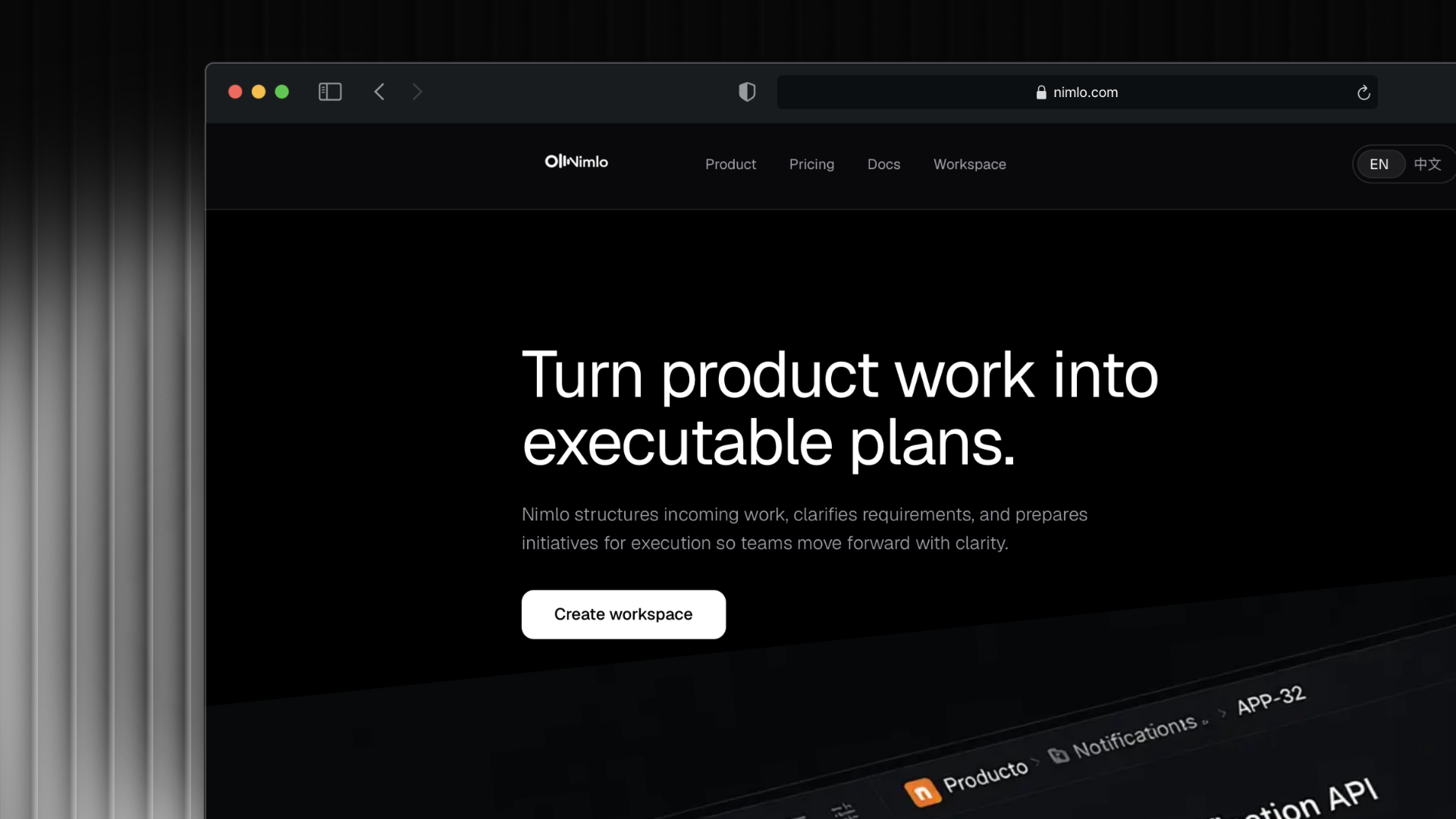
As work progresses, decisions are made quickly, often across multiple environments that were never designed to preserve continuity. What once felt cohesive becomes harder to navigate, and understanding why certain paths were taken requires reconstructing fragmented context.
Over time, this creates friction not because teams lack clarity or intent, but because the systems supporting execution were not built to carry that intent forward. The challenge is not generating ideas, but maintaining their integrity as they evolve into real products.
OPPORTUNITY
Execution can be designed with structure from the start.
Instead of allowing ideas to gradually lose clarity as they move toward implementation, there is an opportunity to create systems that preserve intent, context, and continuity throughout the entire process. By treating execution as something that can be intentionally designed — not just managed — products can evolve more coherently, and decisions can remain connected to their original purpose.
Structural Continuity
Ensure ideas retain their context, intent, and direction as they evolve into real execution, without becoming fragmented over time.
Execution by Design
Create a system where execution follows intentional structure, rather than relying on scattered tools and implicit coordination.
Context as Infrastructure
Treat context not as temporary information, but as a persistent layer that supports clarity, decision-making, and long-term product evolution.
SOLUTION
A system designed to carry ideas through execution.
Nimlo was created to provide a structured environment where ideas can evolve into real products without losing clarity, context, or direction. The system integrates LLM-powered workflows via the GPT API to automate and assist execution processes, while treating execution as a system rather than a collection of disconnected tasks. Nimlo helps preserve continuity and supports how products naturally grow over time.
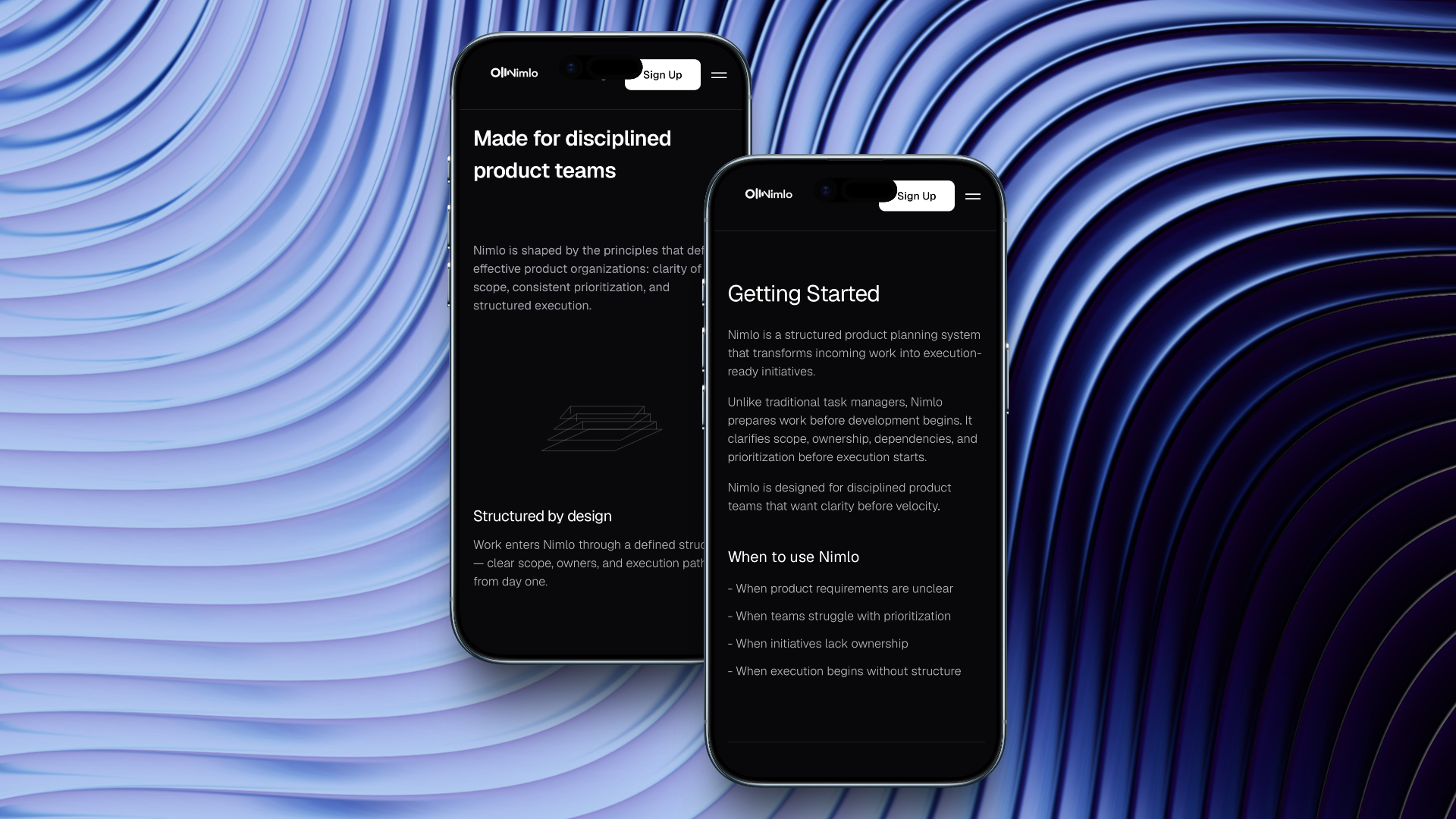
Nimlo approaches execution as something that can be intentionally structured, rather than something that emerges from scattered coordination. Instead of separating planning, decisions, and progress across different environments, it brings them into a shared system where each step builds on the last. This allows ideas to evolve naturally while preserving the reasoning and direction that shaped them from the beginning.
The system is designed to support how products actually grow — through gradual refinement, iteration, and changing understanding. By maintaining continuity between intent and execution, Nimlo reduces the friction that often appears as complexity increases. The goal is not to constrain how teams work, but to provide a stable foundation where ideas can develop with clarity, consistency, and long-term coherence.
RESEARCH
Understanding how execution breaks down over time.
Observing how ideas evolve into real products revealed recurring patterns of context loss, fragmented decision-making, and structural friction — highlighting the need for a more intentional execution system.
In many cases, ideas begin with strong intent and clear direction. However, as execution progresses, decisions are made across different tools, conversations, and moments in time. Over time, the connection between the original idea and its implementation becomes harder to trace.
This fragmentation is not caused by a lack of effort or clarity, but by the absence of a system designed to preserve continuity. Most tools focus on managing tasks or storing information, but they do not maintain the underlying structure that connects intent, decisions, and execution.
These observations revealed that execution itself is a structural problem — one that requires a system capable of supporting how ideas evolve, not just how tasks are completed.
Principles
Defining the foundations of a structured execution system.
Research revealed that solving execution fragmentation required more than features — it required clear structural principles. Nimlo was designed around a set of foundational ideas to ensure continuity, clarity, and intentional progress as ideas evolve into real products, with Agile iteration built into how work advances.
Continuity over isolated actions
Execution should preserve the connection between intent, decisions, and outcomes.
Structure as a foundation
Ideas need a stable system to evolve, not just tools to manage individual steps.
Context as a persistent layer
Understanding why decisions were made should remain accessible over time.
SYSTEM DESIGN
Designing a system that supports how ideas evolve into execution.
Nimlo was designed as a structured environment where ideas can develop into real products without losing continuity. Instead of treating execution as a collection of isolated tasks, the system organizes work around initiatives that preserve intent, context, and direction over time. This allows execution to remain grounded in the original reasoning behind each decision.
Rather than separating planning, decisions, and progress across multiple tools, Nimlo brings them together within a single, coherent system. This makes it possible to follow how ideas evolve, understand how decisions shape outcomes, and maintain clarity as complexity increases. The goal is not to constrain execution, but to provide a stable foundation where ideas can be refined and carried forward with consistency.
OUTCOME
A working foundation for structured product execution.
Nimlo resulted in the design and development of a structured product execution system that translates ideas into clear, continuous initiatives: 10+ modules were designed and shipped, with full LLM workflow integration via the GPT API across core modules. The system was built and validated in approximately two weeks and was designed to be scalable for multi-user use from day one. It establishes a foundation where intent, decisions, and progress remain connected, allowing ideas to evolve without becoming fragmented.
Through building Nimlo, it became possible to validate how a structured execution layer improves clarity and continuity over time. Ideas can now be initiated, developed, and refined within a single environment designed to support their evolution, rather than relying on disconnected tools and implicit coordination.
More importantly, Nimlo became a functional exploration of how product systems can be designed to preserve intent as complexity grows. It serves not only as a working platform, but as a framework for thinking about execution as a structural process rather than a sequence of tasks.
Reflection
What I learned
Execution needs structure.
Ideas don't fail because they lack clarity in the beginning, but because the systems supporting them don't preserve that clarity over time. Designing Nimlo reinforced that execution must be intentionally structured, not left to emerge from fragmented tools.
Think beyond individual features.
Building Nimlo shifted my focus from designing isolated functionality to designing systems. What matters most is not just what a product can do, but how it supports continuity, decision-making, and long-term evolution.
Built for global scale.
Nimlo was designed with global scalability in mind — as a foundation for a product that can serve teams across different markets and contexts.